Support Better Oral Health by Putting Plaque Control First
Learn how dental plaque and oral biofilm affect gums and teeth, why mechanical cleaning comes first, and where Dentolyn may fit as a complementary oral-health supplement.
This page may earn a commission from qualifying purchases. This does not change the price you pay or our evidence standards.
Plaque Is a Biofilm, Not Just Food Debris
The supplied research describes dental plaque as a bacterial biofilm. Poor brushing and flossing can allow plaque to accumulate, creating an environment that favors microbial shifts relevant to oral health.
Biofilm
Plaque is a structured microbial community on tooth surfaces.
Mechanical control
Brushing and interdental cleaning physically disrupt plaque.
Supplement limit
An oral-health supplement does not mechanically remove established plaque.
Compare Dentolyn as a Complementary Oral-Health Supplement
Use supplementation only around the fundamentals: brushing, interdental cleaning, plaque control, diet and appropriate dental care.
Why Plaque Matters for Gums
The supplied review describes gingivitis as inflammation commonly associated with microbial plaque accumulation on tooth surfaces and emphasizes effective tooth brushing for debris removal and limiting further plaque growth.
Why Plaque Matters for Teeth
Cariogenic biofilm can create an acid-producing environment on tooth surfaces. This makes plaque control relevant not only to gums but also to tooth-health decisions.
Mechanical Plaque Control vs Supplemental Support
| Mechanical / established care | Supplemental layer |
|---|---|
| Brushing | Diet awareness |
| Interdental cleaning | Hydration |
| Professional cleaning where needed | Optional oral-health supplement |
| Direct physical disruption of plaque | Formula-based support that does not remove biofilm |
Where Dentolyn May Fit
Dentolyn may be evaluated as an optional oral-health supplement after the user has addressed the fundamentals of plaque control. The currently reviewed formula lists xylitol, but ingredient evidence does not establish that Dentolyn removes plaque or treats gingivitis or periodontitis.
Xylitol and Plaque Context
The supplied review discusses xylitol-containing mints and gums in association with lower S. mutans counts and potentially reduced plaque adherence. That is relevant ingredient-level evidence. It is not proof that Dentolyn itself removes plaque.
Explore Xylitol & Oral-Health Support →
Plaque Decision Framework
| What you notice | Primary next step |
|---|---|
| Normal preventive goal | Maintain consistent brushing and interdental cleaning. |
| Visible plaque accumulation | Improve mechanical cleaning and consider professional cleaning if needed. |
| Bleeding gums | Do not rely only on supplementation; assess the cause. |
| Pain or swelling | Seek appropriate dental assessment. |
| Interest in oral-health supplements | Evaluate only after the plaque-control foundation is in place. |
What Dentolyn Can and Cannot Reasonably Be Expected to Do
Reasonable framing: complementary oral-health supplement, xylitol-containing formula, optional layer around established care.
Unsupported framing: plaque remover, gingivitis treatment, periodontal treatment, cavity treatment, substitute for brushing or professional cleaning.
Need More Evidence?
Biofilm research
Use Domain B for deeper research on oral biofilm and plaque.
Read the biofilm guide →When Supplement Shopping Should Stop
Persistent bleeding, swelling, pain, loose teeth or other concerning symptoms require appropriate dental assessment rather than a supplement-only response.
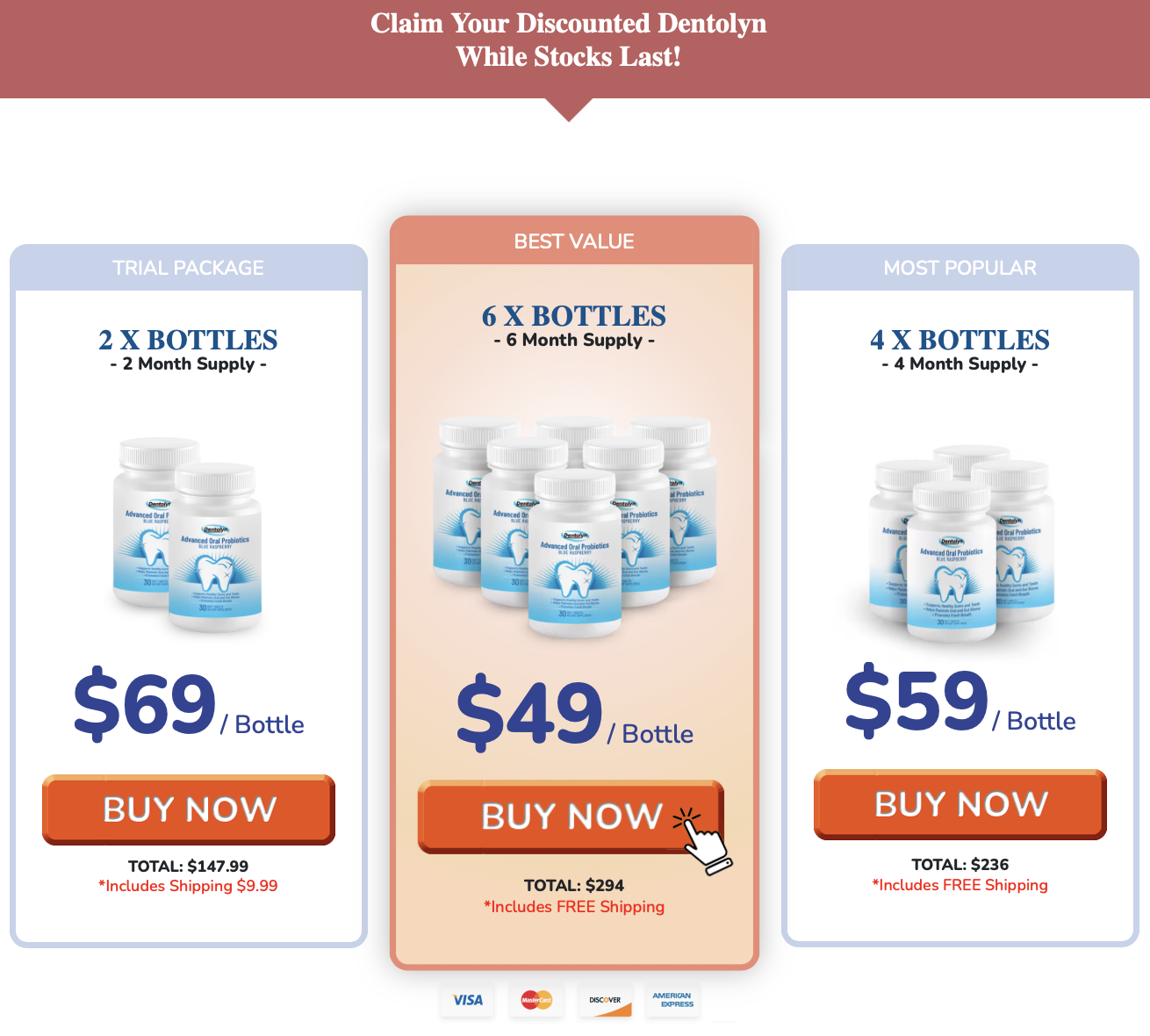
Compare the Current Dentolyn Packages
After putting plaque control first, compare bottle count, total price, per-bottle price, shipping and guarantee.
Frequently Asked Questions
What is dental plaque?
Dental plaque is a microbial biofilm that accumulates on tooth surfaces.
Can plaque affect gums and teeth?
Yes. Plaque is relevant to gingivitis, periodontal disease and dental caries.
Can Dentolyn remove plaque?
No finished-product evidence establishes that Dentolyn mechanically removes dental plaque.
Can a supplement replace brushing and flossing?
No. Mechanical cleaning remains foundational.
Does Dentolyn contain xylitol?
The current reviewed formula lists xylitol.
Does xylitol prove Dentolyn removes plaque?
No. Ingredient research does not establish finished-product plaque-removal efficacy.
When should plaque-related symptoms be checked?
Persistent bleeding, swelling, pain, loose teeth or other concerning symptoms should receive appropriate dental assessment.
References
Rajasekaran JJ, Krishnamurthy HK, Bosco J, et al. Oral Microbiome: A Review of Its Impact on Oral and Systemic Health. Microorganisms. 2024;12:1797. DOI.
Why Plaque Control Requires Physical Disruption
Plaque adheres to tooth surfaces as a structured biofilm. That physical structure is one reason brushing and interdental cleaning remain foundational. A supplement may influence the oral environment indirectly, but it should not be described as scraping, dissolving or mechanically removing established plaque unless direct evidence supports that specific effect.
Plaque Amount and Plaque Behavior Are Different Questions
Consumers often treat all plaque-related claims as equivalent. They are not. One study may measure plaque quantity, another bacterial adherence, another microbial composition, and another gum inflammation. A change in one endpoint should not automatically be translated into all the others. Product claims should follow the exact outcome actually studied.
Where Diet Fits Into Plaque Risk
Repeated exposure to fermentable carbohydrates can favor acid-producing conditions within dental biofilm. This does not make diet the only cause of plaque, but it explains why plaque control works best as a combination of mechanical cleaning and sensible dietary habits rather than relying on one ingredient or supplement.
How to Read a Plaque-Support Claim
Ask whether the claim concerns formation, adherence, accumulation, bacterial composition, gum response or physical removal. Then ask whether the evidence comes from the same ingredient form and delivery method used in the marketed product. This step prevents ingredient research from being overstated as proof that the finished supplement removes plaque.
What Dentolyn Can Reasonably Add
The reviewed Dentolyn formula includes xylitol, which has relevant oral-health research in certain delivery forms. That makes xylitol scientifically relevant to the discussion. It does not establish that Dentolyn replaces brushing, removes biofilm, treats gingivitis or prevents periodontal disease. The product belongs, if anywhere, as an optional layer around established plaque-control habits.
When Plaque Becomes More Than a Home-Care Question
Persistent bleeding, swelling, pain, gum recession, loose teeth or heavy deposits that do not improve with routine care may require professional assessment and cleaning. A supplement-only response can delay identification of a problem that needs direct dental management.
Plaque Control Is Cumulative
Plaque management depends on repeated daily disruption. Missing mechanical cleaning repeatedly allows biofilm to re-establish, which is why a supplement cannot compensate for inconsistent brushing or interdental cleaning. The most useful role for a product like Dentolyn is therefore secondary: it may complement an already functional routine, but it should not become the main strategy for controlling plaque or managing symptoms associated with plaque accumulation.
Professional cleanings may also matter when deposits are difficult to remove at home or when a dentist identifies areas that need direct management.
Ready to Compare Dentolyn After Putting Plaque Control First?
Maintain mechanical plaque control, review the formula and evidence, then compare the current Dentolyn offer.