Support Oral Health After 40 With Smarter Daily Habits
Review oral-health priorities after 40, including dry-mouth and medication considerations, daily hygiene, and where Dentolyn may fit as a complementary supplement.
This page may earn a commission from qualifying purchases. This does not change the price you pay or our evidence standards.
What Changes in Oral-Health Priorities After 40?
There is no single biological switch at age 40. The practical reason to use an “after 40” page is that medication use, dry mouth, cumulative dental history and changing health conditions may become more relevant for some adults as they age. The supplied research discusses older and elderly populations, but it does not establish age 40 as a scientific cutoff.
Saliva and dry mouth
Reduced saliva flow can affect comfort, taste and the oral environment.
Medication review
Some medicines can contribute to dry mouth or alter oral microbial conditions.
Routine consistency
Brushing, interdental cleaning and professional care remain foundational at every age.
Compare Dentolyn as an Optional Oral-Health Supplement
For adults over 40, the same principle applies: establish the fundamentals first, then evaluate whether a supplement fits the individual's routine and goals.
Why Dry Mouth Deserves Attention
The supplied review discusses reduced saliva flow in older hospitalized adults and notes that medications may contribute to xerostomia, or dry mouth. Saliva plays several roles in the oral environment, so persistent dryness should not be treated as a trivial issue.
Medication Effects Can Matter
The same review identifies medications as one of several factors that can influence oral microbial ecology. This does not mean that everyone over 40 will experience medication-related oral problems, but it does justify reviewing new or persistent symptoms in context.
There Is No Scientific “Age 40” Switch
Oral-Health Priorities After 40
| Priority | What to review |
|---|---|
| Daily hygiene | Brushing quality and interdental cleaning |
| Dry mouth | Hydration, saliva changes and medication context |
| Gum health | Bleeding, recession, swelling or discomfort |
| Tooth health | Sensitivity, restorations, pain or visible damage |
| Supplement use | Formula, evidence level, interactions and routine fit |
Where Dentolyn May Fit
Dentolyn may be considered as an optional oral-health supplement for adults who already maintain appropriate oral hygiene and want to review the product's disclosed formula. It should not be presented as a treatment for dry mouth, gum disease, tooth decay or age-related oral conditions.
What to Ask Before Adding a Supplement
| Question | Why it matters |
|---|---|
| Are symptoms new or persistent? | They may need assessment rather than supplementation. |
| Have medications changed? | Medication effects may be relevant to dryness or oral comfort. |
| Is the formula transparent? | Know what you are taking. |
| Is evidence product-specific? | Ingredient evidence should not be mistaken for finished-product proof. |
| Does it fit the existing routine? | Supplements should complement, not replace, oral care. |
Stronger Fit vs Weaker Fit
Potentially stronger fit: adults with a stable oral-care routine who want an optional supplement and understand its evidence limits.
Weaker fit: anyone expecting a treatment for dry mouth or dental disease, or using a supplement instead of investigating new or persistent symptoms.
Useful Next Steps
When to Seek Professional Assessment
Persistent dry mouth, pain, bleeding, swelling, loose teeth, unexplained lesions or other worsening symptoms should be assessed appropriately. Supplementation should not be the sole response.
Compare the Current Dentolyn Packages
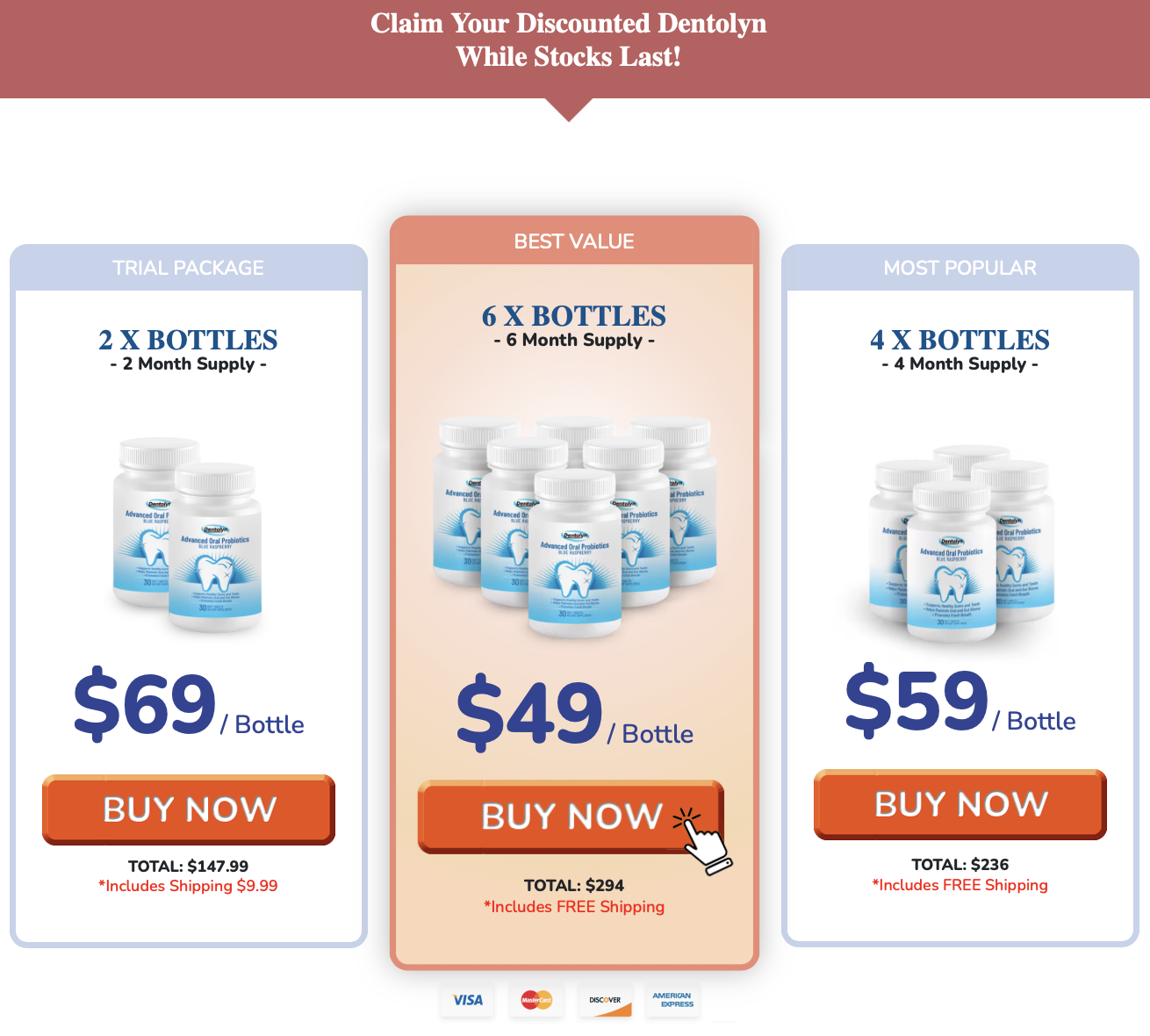
If Dentolyn fits your routine, compare the current bottle count, total cost, per-bottle price, shipping and guarantee before purchasing.
Frequently Asked Questions
Does oral health automatically worsen after 40?
No. Age alone does not determine oral health; habits, medications, saliva, health conditions and dental care all matter.
Why can dry mouth matter more with age?
Reduced saliva can affect oral comfort and function, and some medications can contribute to dry mouth.
Does the research establish a special age-40 threshold?
No. The supplied research discusses aging and elderly populations, not a specific biological cutoff at age 40.
Can Dentolyn treat dry mouth?
No such finished-product claim is established.
Can Dentolyn replace dental care after 40?
No. It should only be considered as a complementary oral-health supplement.
When should oral symptoms be professionally assessed?
Persistent pain, bleeding, swelling, dry mouth, lesions or worsening symptoms warrant appropriate evaluation.
References
Rajasekaran JJ, Krishnamurthy HK, Bosco J, et al. Oral Microbiome: A Review of Its Impact on Oral and Systemic Health. Microorganisms. 2024;12:1797.
Why Oral-Health Needs Can Become More Individual With Age
Adults do not cross a single biological threshold at 40, but cumulative dental history, restorations, medication exposure, dry mouth, gum changes and chronic health conditions may become more relevant over time. That makes individualized review increasingly useful even though age alone does not determine oral-health status.
Dry Mouth Deserves Its Own Assessment
Saliva supports lubrication, comfort, taste and the oral environment. Persistent dry mouth can therefore affect more than comfort. It may be linked to medications, hydration, medical conditions or other factors. A supplement should not be assumed to correct the cause, especially when the reason for reduced saliva flow has not been identified.
Medication Review Is Part of Oral-Health Review
Some medications can influence saliva or oral microbial conditions. The practical implication is not to stop prescribed treatment, but to recognize when a new oral symptom appears after a medication change and raise it with the appropriate clinician or dentist. Product marketing should never encourage a user to alter prescribed medication in order to improve oral health.
Why Existing Dental Work Changes the Decision
Adults over 40 may have fillings, crowns, implants, bridges, periodontal history or previous root-canal treatment. These factors can change what needs monitoring and how professional cleaning is approached. They also reinforce why a generic supplement cannot replace individualized dental care.
How Dentolyn Fits Into an After-40 Routine
Dentolyn can be evaluated as an optional oral-health supplement if the user has already addressed the basics and reviewed ingredient suitability. It should not be positioned as a treatment for dry mouth, gum recession, tooth decay, age-related oral disease or medication-related problems. Those are separate clinical questions.
Useful Signs to Monitor Over Time
Pay attention to changes in bleeding, sensitivity, dry mouth, chewing comfort, breath, loose teeth, recurrent sores and the fit of existing dental work. A meaningful change is more important than the birthday itself. Persistent or worsening symptoms should move the decision away from supplement shopping and toward appropriate assessment.
Ready to Compare Dentolyn for Your Oral-Health Routine After 40?
Review dry-mouth and medication context, maintain the fundamentals, then compare the current Dentolyn offer if it fits your goals.