Dentolyn Official Website: Verify the Purchase Route Before Buying
Understand what buyers mean by the Dentolyn official website, how to verify the current purchase route, and what to check before entering payment details.
This page may earn a commission from qualifying purchases. This does not change the price you pay or our evidence standards.
What Does “Official Website” Mean for a Buyer?
For a purchase decision, “official website” should mean a seller-controlled or merchant-authorized route that can be verified, not simply a page that uses the word “official” in its title, ad or search snippet.
Merchant route
The commercial buttons on this page use the approved Dentolyn affiliate link to reach the current seller offer.
Live verification
Confirm seller identity, package details, price, shipping and guarantee after the redirect.
Do not assume
A domain name, ad label or search ranking is not enough by itself to prove official status.
Open the Current Dentolyn Merchant Offer
Use the destination as the final transaction reference for current package availability, price and shipping.
Why This Page Does Not Hard-Code an “Official” Merchant Domain
Affiliate purchase links can route through tracking and merchant systems, and landing domains may change over time. Without current authoritative confirmation, hard-coding a domain as the official Dentolyn website would create an avoidable accuracy risk.
How to Verify the Destination
Look for clear merchant or checkout identification.
Check that the product name, package structure and label presentation are consistent.
Confirm the live checkout total rather than relying on an older screenshot or article.
Verify whether shipping is free or charged separately.
Read the current guarantee conditions and process.
Confirm secure checkout indicators before entering payment information.
Search Results Are Not Proof of Official Status
A page can rank for “Dentolyn official website” without being the seller. Likewise, sponsored results, social posts and marketplace listings may use commercial language that does not establish authorization.
Current Reviewed Offer Snapshot
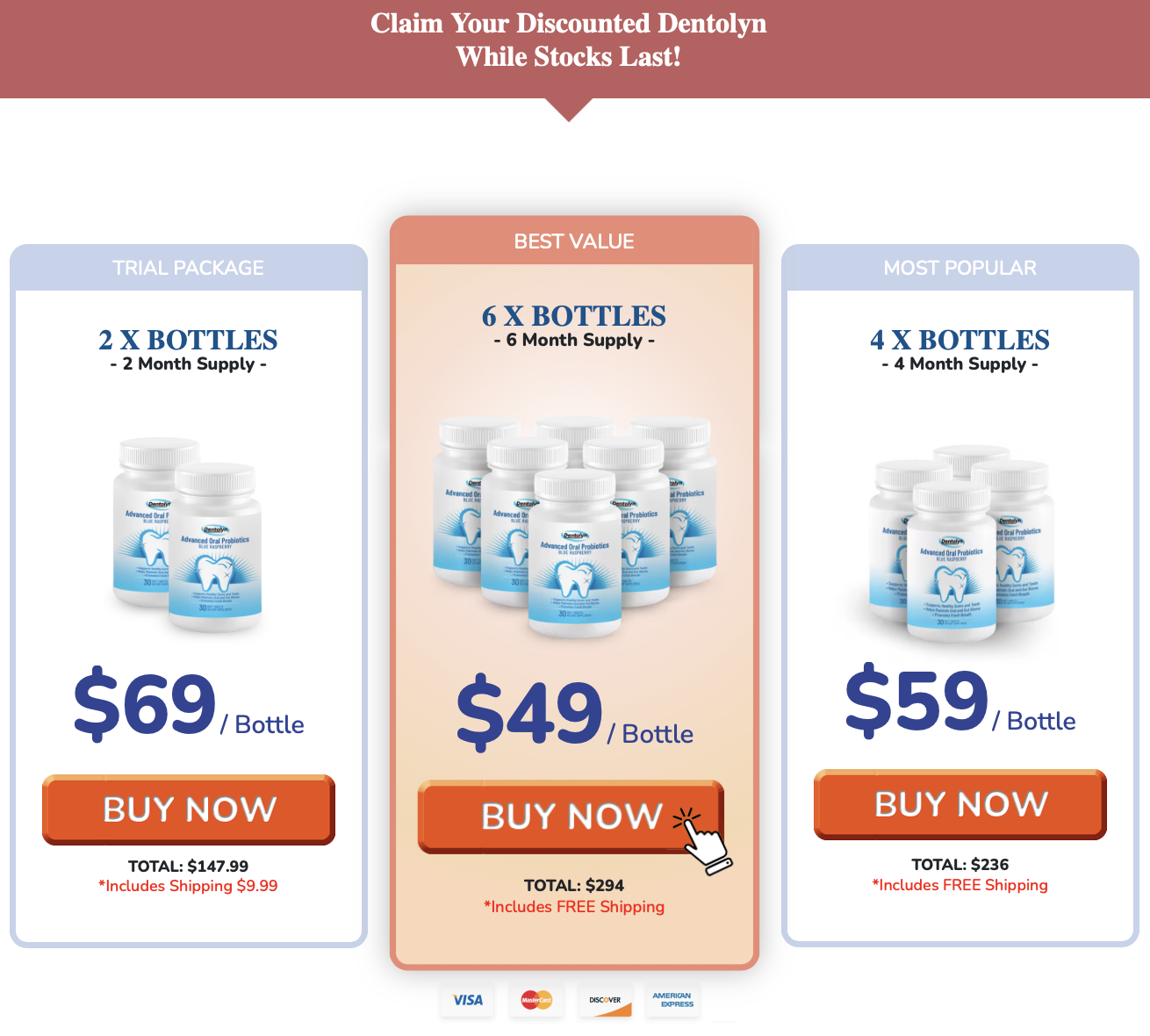
| Package | Reviewed price | Shipping |
|---|---|---|
| 2 bottles | $69/bottle; $147.99 total | $9.99 included in reviewed total |
| 4 bottles | $59/bottle; $236 total | Free shipping currently shown |
| 6 bottles | $49/bottle; $294 total | Free shipping currently shown |
The current reviewed guarantee is 365 days. Reconfirm all transaction terms on the live merchant destination.
Official Route vs Product Evidence
Finding the intended seller answers a purchase-authenticity question. It does not answer whether Dentolyn is effective for a particular oral-health outcome. Product evidence, formula interpretation and purchase-route verification are separate decisions.
Use the Right Page for the Right Question
Verify the Live Dentolyn Merchant Destination
Commercial terms and routing can change. Confirm the live seller and transaction details before purchase.
Frequently Asked Questions
What is the Dentolyn official website?
This site does not independently assert a specific merchant domain as official unless that status is verified. The purchase buttons use the approved affiliate link to reach the current merchant offer.
Why not list a fixed official domain name?
Merchant landing domains and checkout routing can change. A fixed domain claim should only be made when current authoritative evidence supports it.
How do I verify that I reached the intended seller?
Inspect the destination, seller identity, package details, final price, shipping and refund terms before paying.
Is a Google result saying official enough proof?
No. Search-result wording alone does not establish seller authorization or authenticity.
Does this page link to the current merchant offer?
Yes. Its commercial CTAs use the approved Dentolyn affiliate URL.
Can the merchant route change?
Yes. That is why live verification at the destination is important.
What else should I review before buying?
Formula, evidence level, current pricing, guarantee, shipping and authenticity considerations.
Why “Official” Should Be Treated as a Verifiable Claim
The word “official” is widely used in search ads, page titles and affiliate content, but its presence does not prove seller authorization. A defensible official-site claim should be supported by current merchant information, a recognized seller relationship or another authoritative source. Without that verification, the safer approach is to describe the known purchase route rather than make a stronger ownership claim.
Affiliate Redirects Can Obscure the Final Destination
An affiliate link may pass through a tracking domain before reaching a merchant page or checkout. That routing is normal in affiliate commerce, but it means the visible affiliate URL is not necessarily the merchant's public-facing domain. Buyers should therefore inspect the destination after the redirect and confirm that the product and seller details are consistent.
How to Check Whether the Destination Makes Sense
Look for a consistent product name, package structure, seller or checkout identity, secure payment connection, current price, shipping terms and refund information. No single visual element proves official status, but consistency across these transaction details provides a more useful basis for trust.
Why Search Ranking Is Not Authorization
Organic ranking, sponsored placement or a prominent social post can make a page easy to find, but ranking systems do not certify seller status. A page can optimize for “Dentolyn official website” without being the merchant. Search visibility and commercial authorization are separate questions.
Why a Fixed Domain Claim Can Become Stale
Merchants can change landing pages, tracking systems and checkout providers. A domain that was used previously may no longer be the current purchase destination. Hard-coding an “official” domain without continuing verification can therefore create a stale or misleading buyer path.
What the Buyer Should Treat as Final
The live checkout should be the final source for the package selected, transaction total, shipping and guarantee wording. This page can help identify the intended merchant-linked route, but the buyer should still verify the destination before submitting payment information.
Official-Route Verification Should Be Repeatable
A useful verification process should work even if the landing page changes. Start from the approved merchant-linked route, inspect the destination, compare product and package details, confirm seller and refund information, and check the final transaction terms. This method is more durable than relying on a single domain name that may later change.
If the destination differs from earlier screenshots or cached pages, that difference should trigger verification rather than an automatic conclusion. Merchant infrastructure can change, but the transaction still needs consistent product, seller, package, price and refund information before the route is treated as trustworthy.
Ready to Verify the Current Dentolyn Buying Route?
Use the merchant-linked destination, confirm the seller and transaction details, and only then complete checkout.